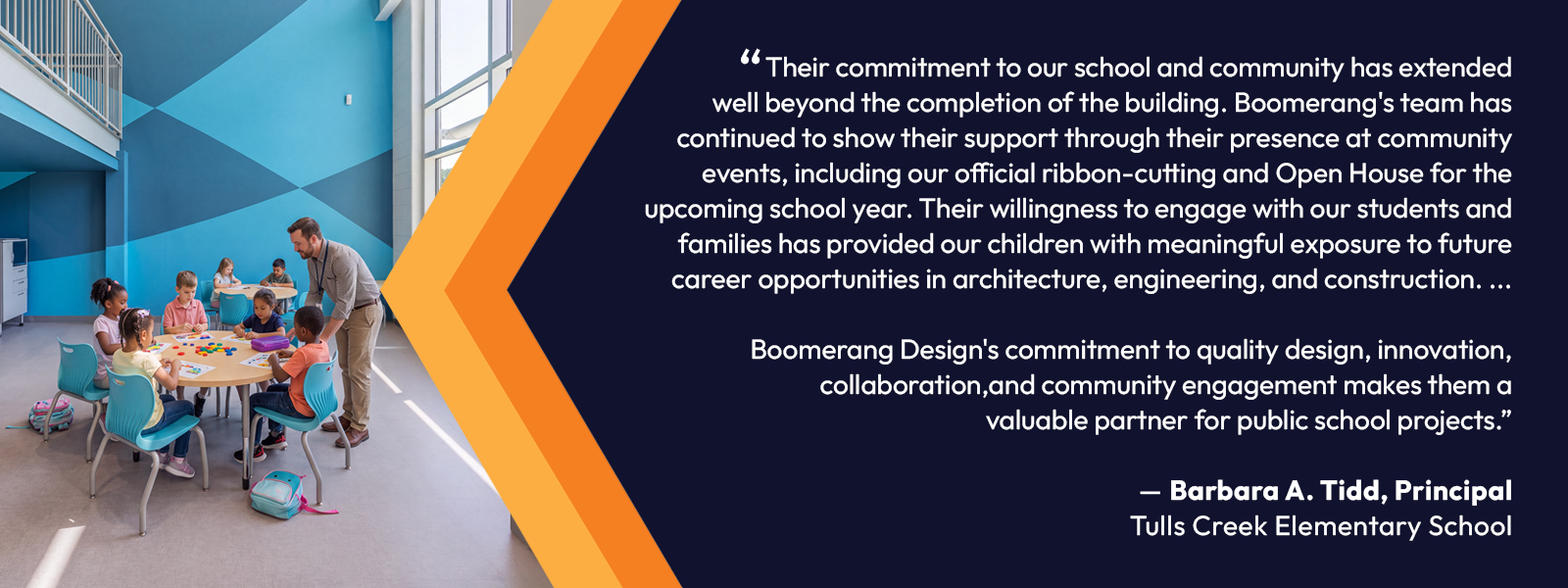
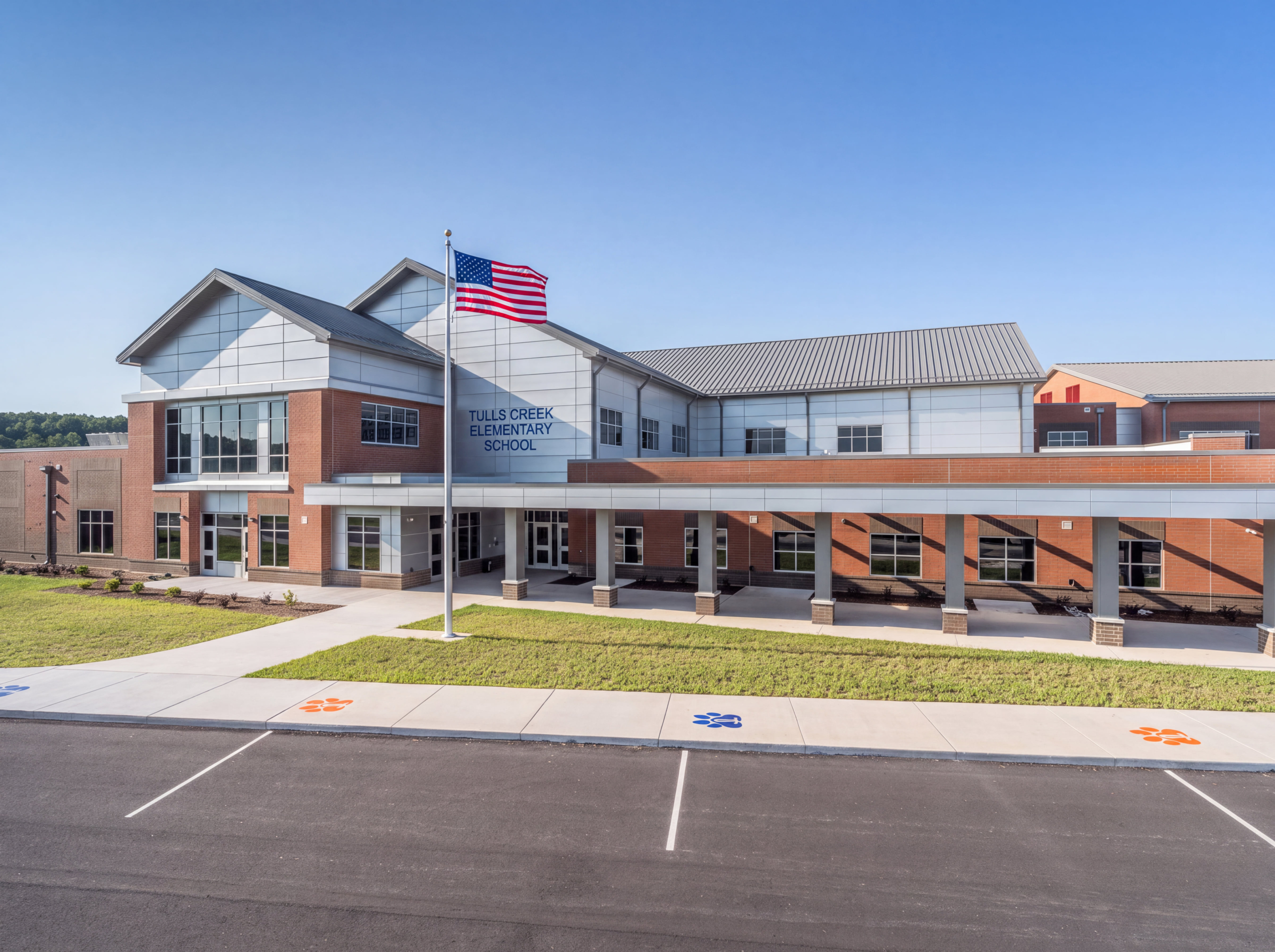
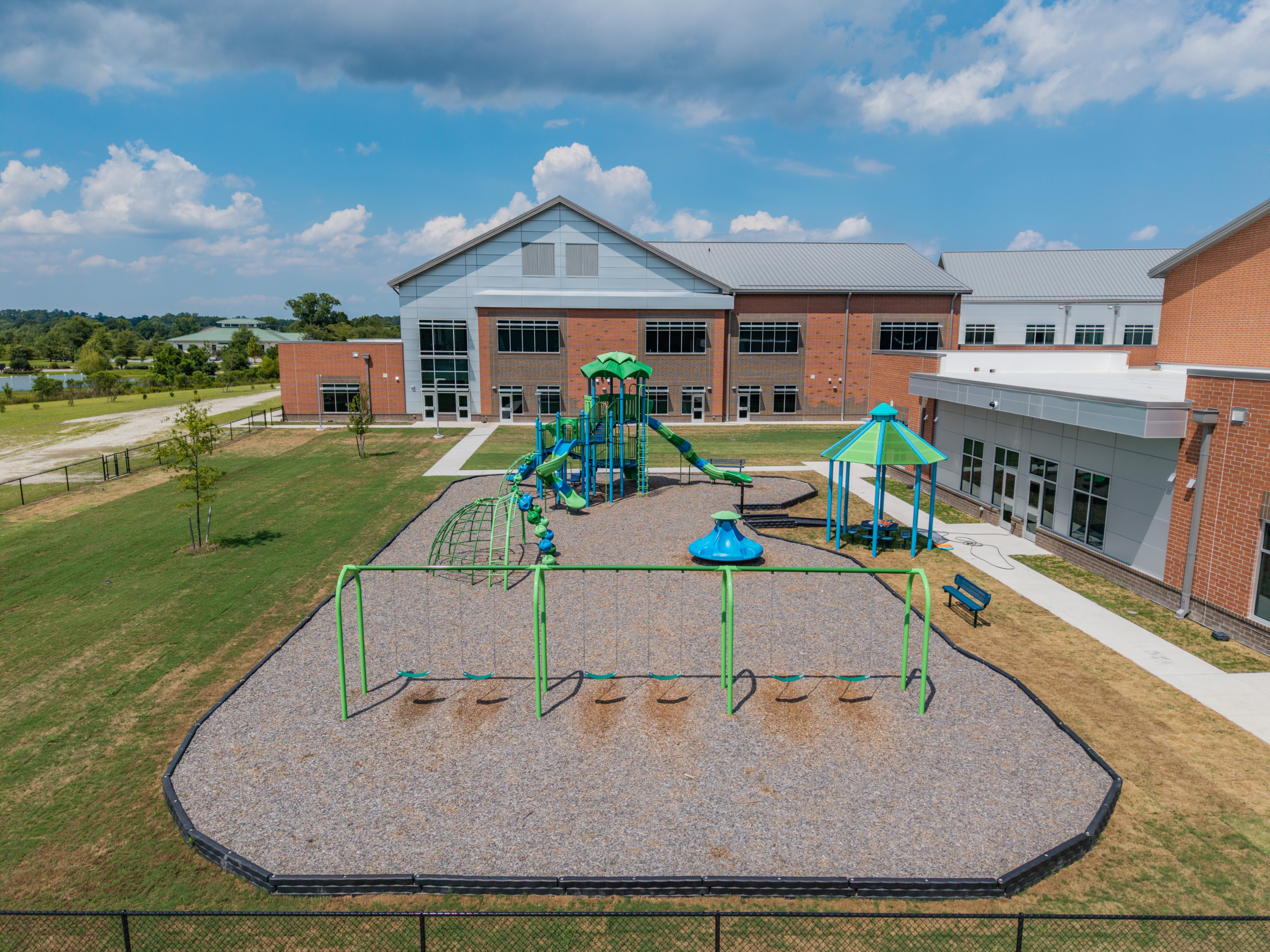
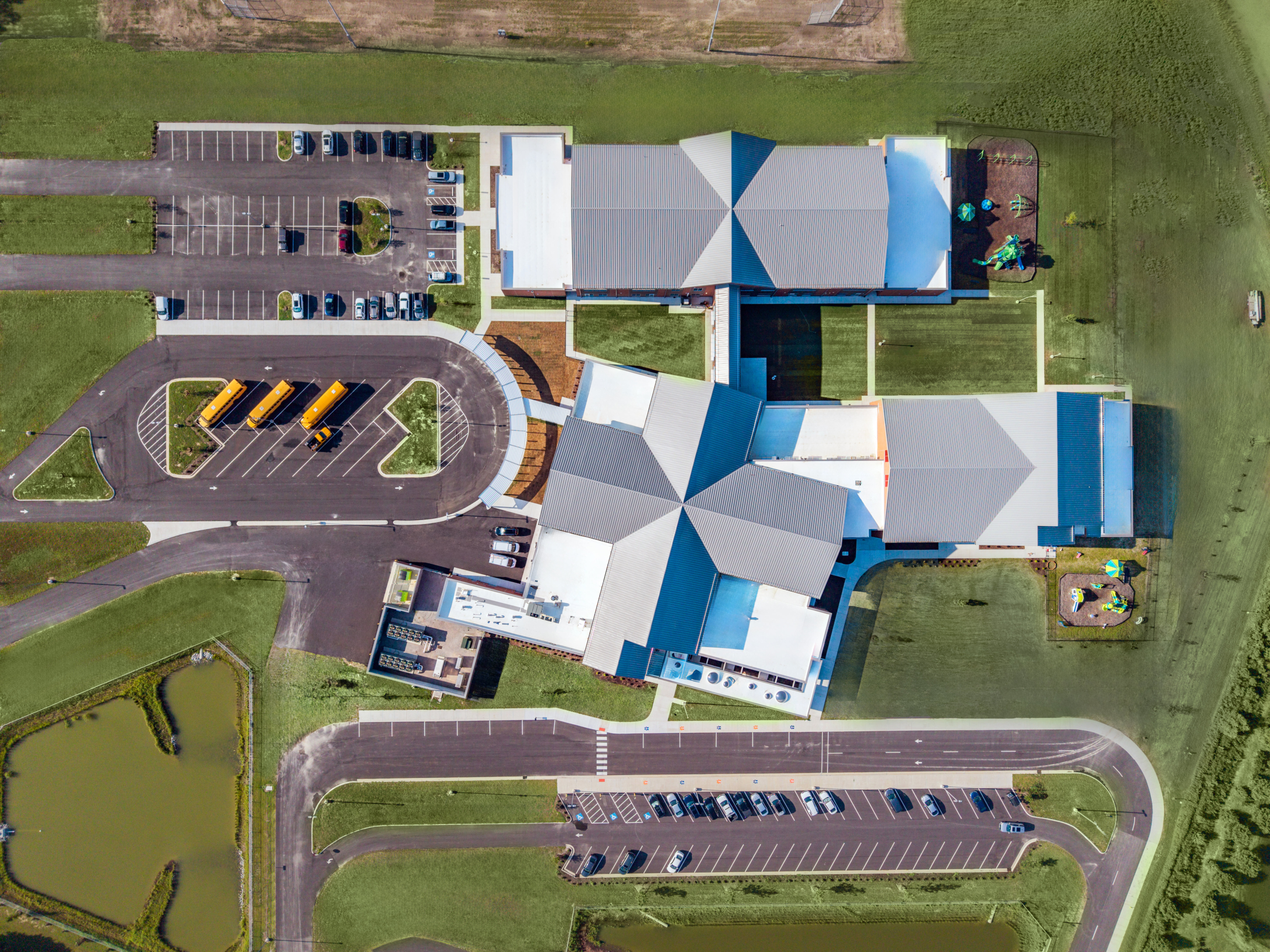
Boomerang Design worked with Currituck County Schools to design and construct Tulls Creek Elementary School. This new 118,000-square-foot facility accommodates 800 students in grades K-5. The school features flexible classroom layouts, opportunities for indoor-outdoor connectivity, and a strong emphasis on energy efficiency to support the growing population of Currituck County.
- Client: Currituck County Schools
- Location: Moyock, NC
- Size: 118,000 SF
- Delivery Method: Design-Build

Accommodating Enrollment Fluctuations
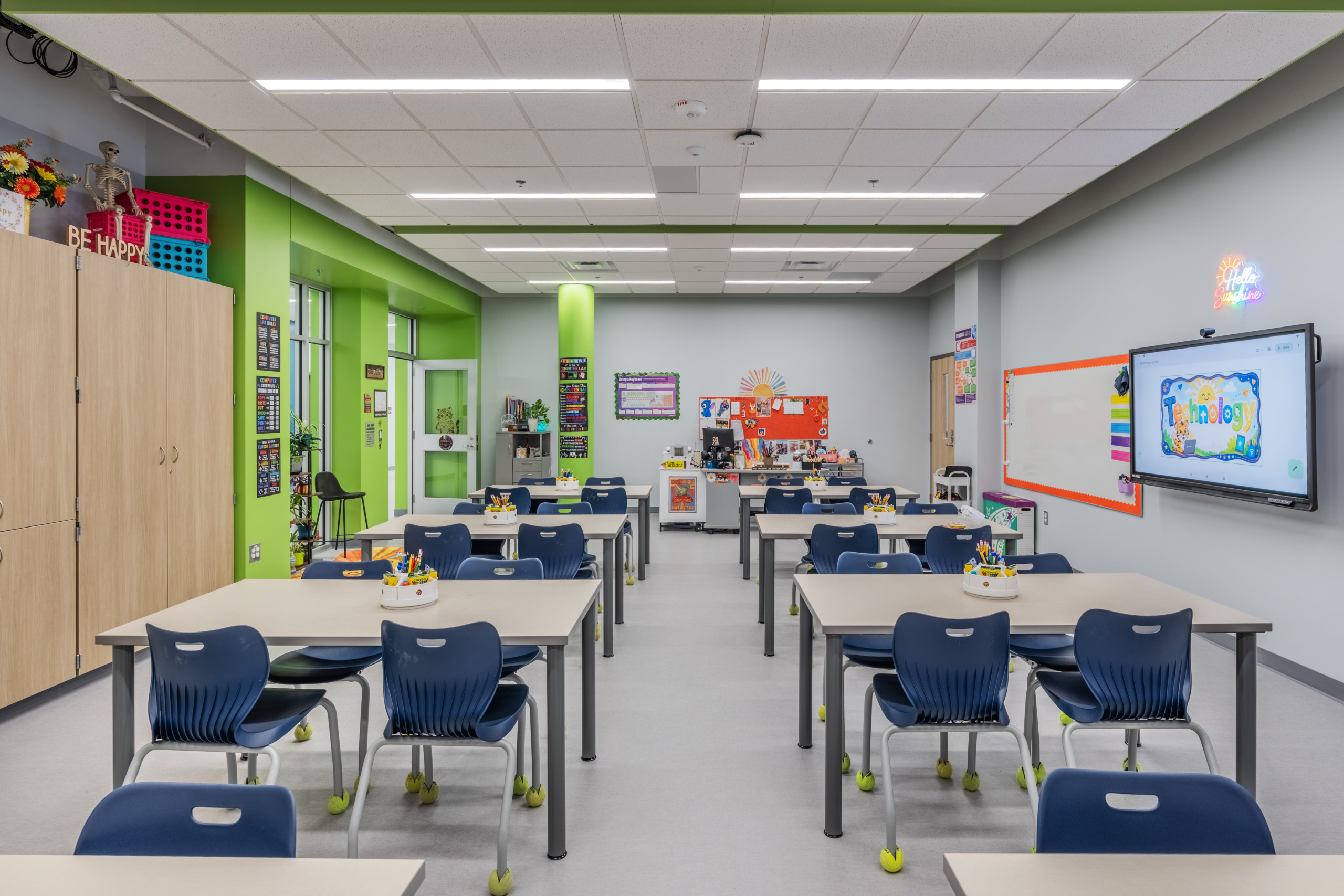
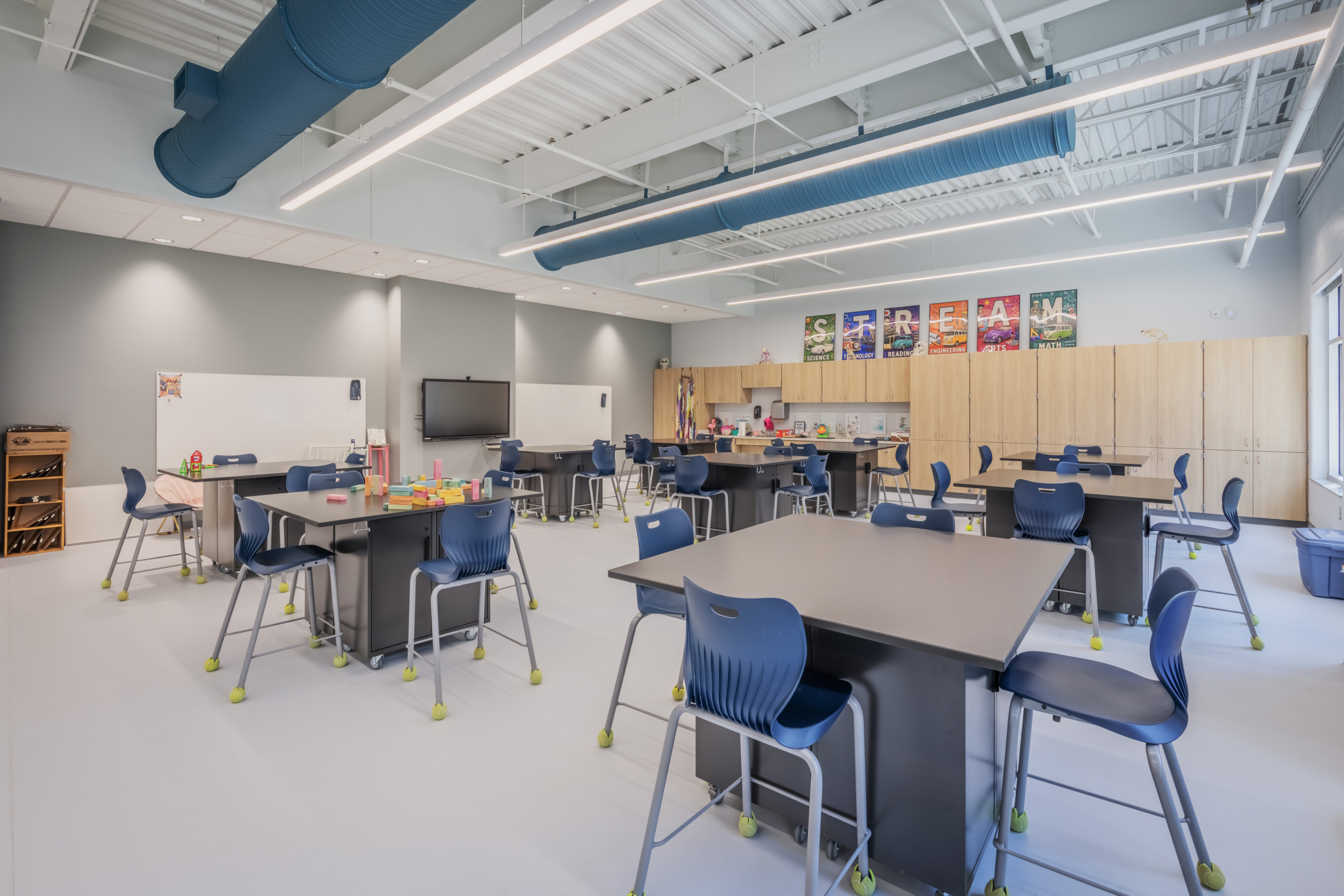
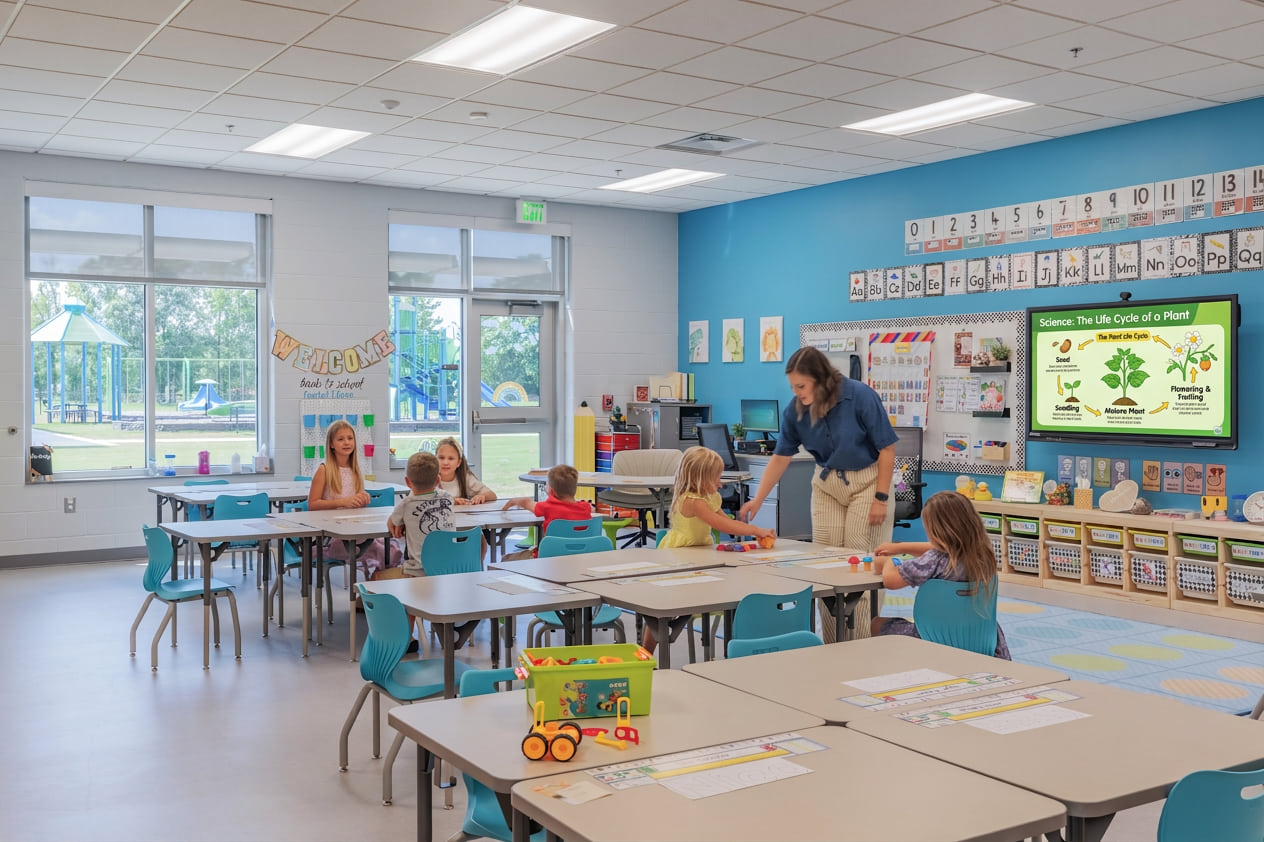
Early in the design process, it became clear that flexibility was an important goal for supporting the school’s evolving needs. The number of classrooms within each grade level may change over time, so classrooms were designed with the same core “bones” to allow spaces to transition seamlessly from one grade to another. Each classroom has similar dimensions and casework, equipped with uniform plumbing fixture heights and adaptable furniture. This approach allows for seamless transitions in classroom utilization by grade level, providing immediate solutions to overcrowding and fostering long-term savings through easy expansion capabilities.
Supporting Active Learning in Every Space
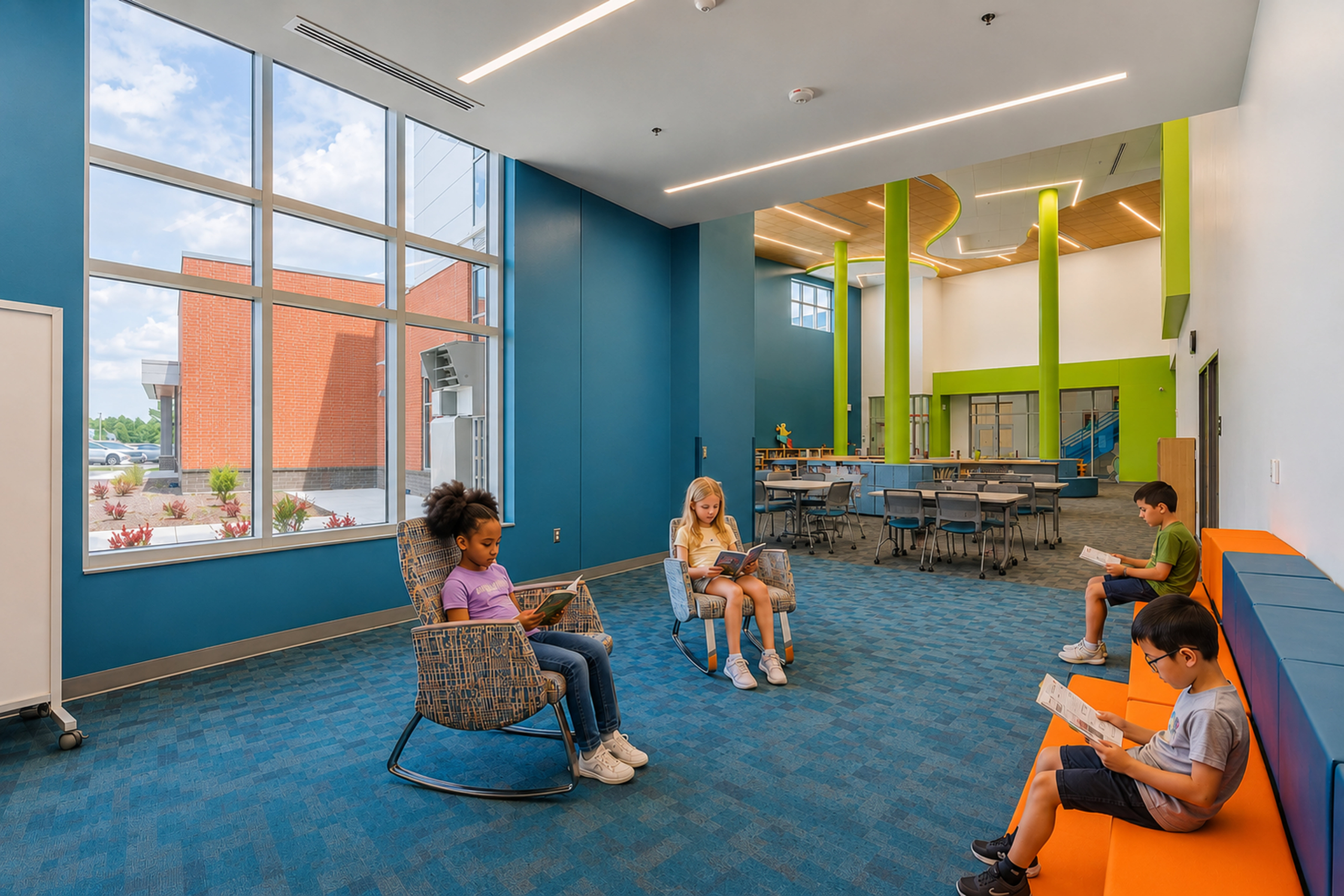
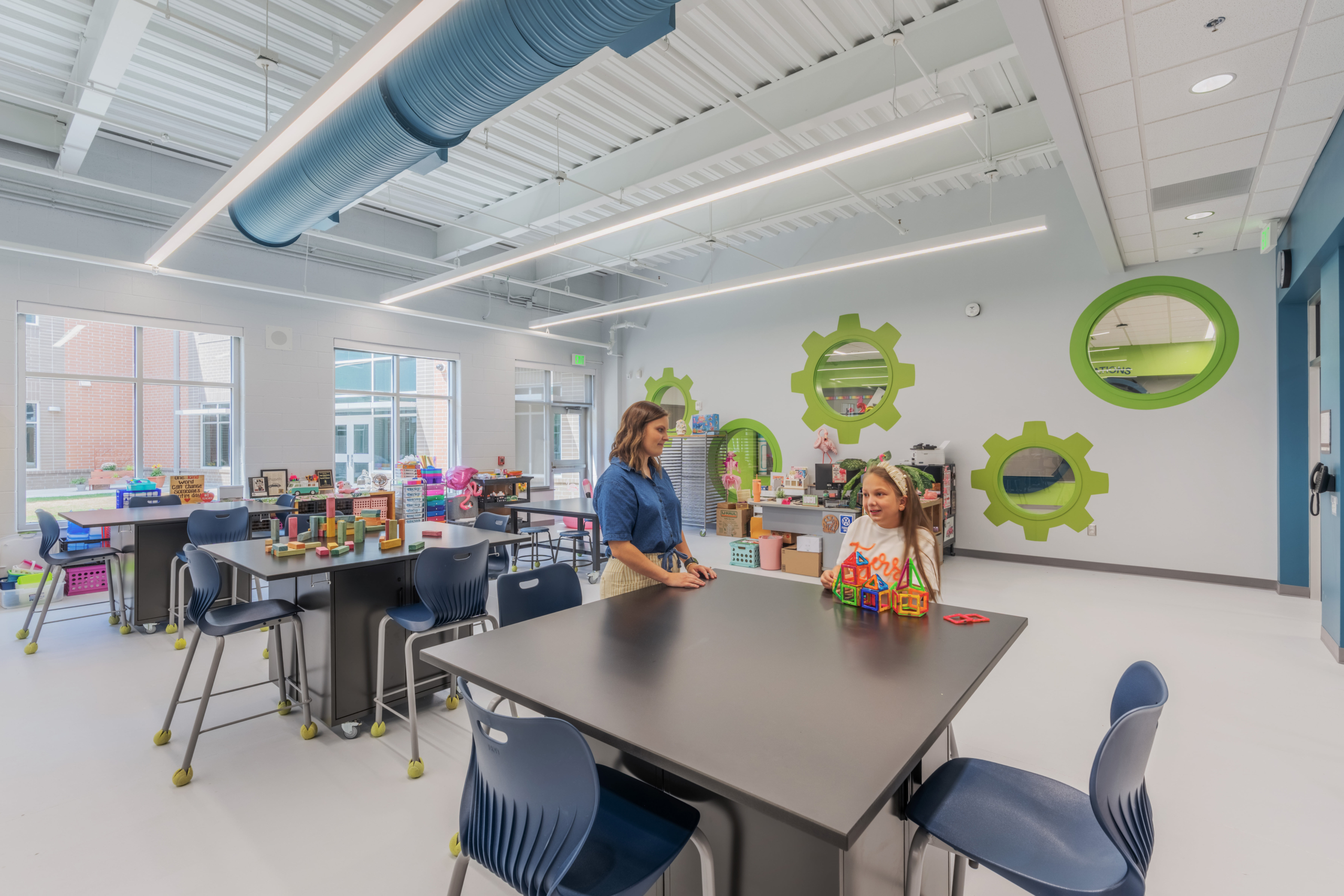
Active learning classrooms are designed to engage students actively in the learning process rather than having them passively receive information. The design of Tulls Creek supports this pedagogy by including classroom furniture that can be reconfigured as needed, allowing teachers to easily adapt the space to support different teaching methods, group sizes, and activities. This flexibility supports a more dynamic learning experience and allows the classroom to evolve throughout the day as learning needs change.
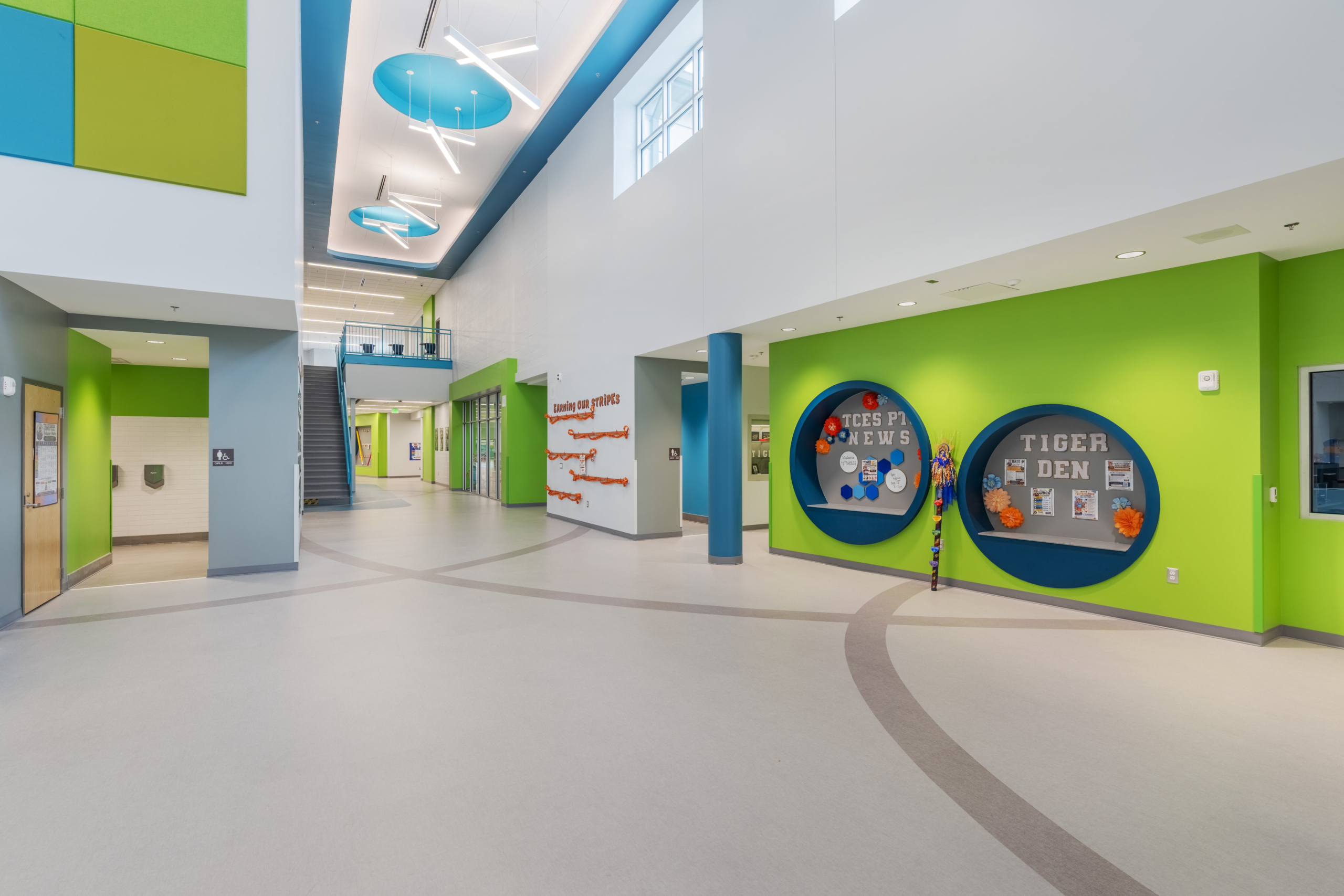
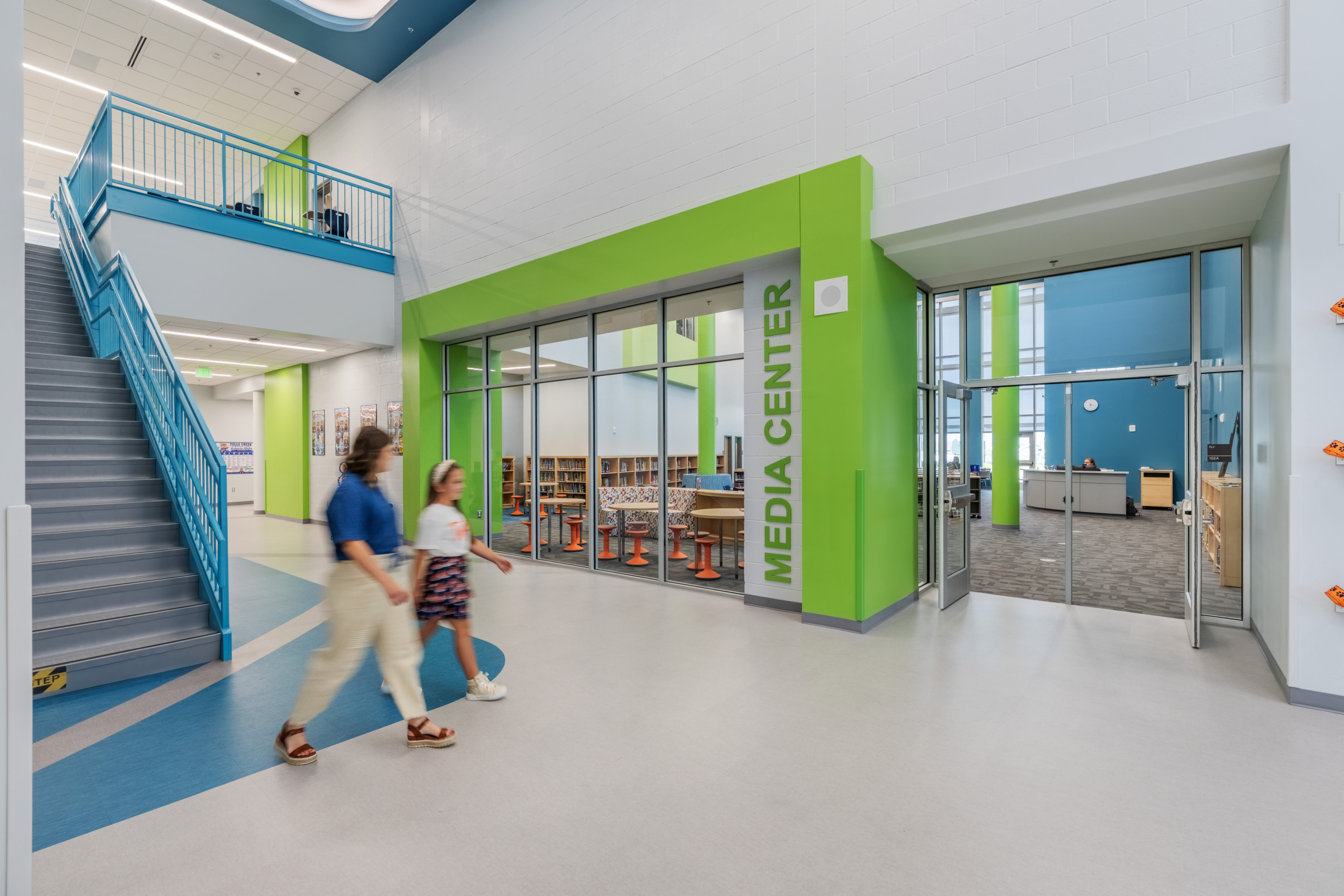
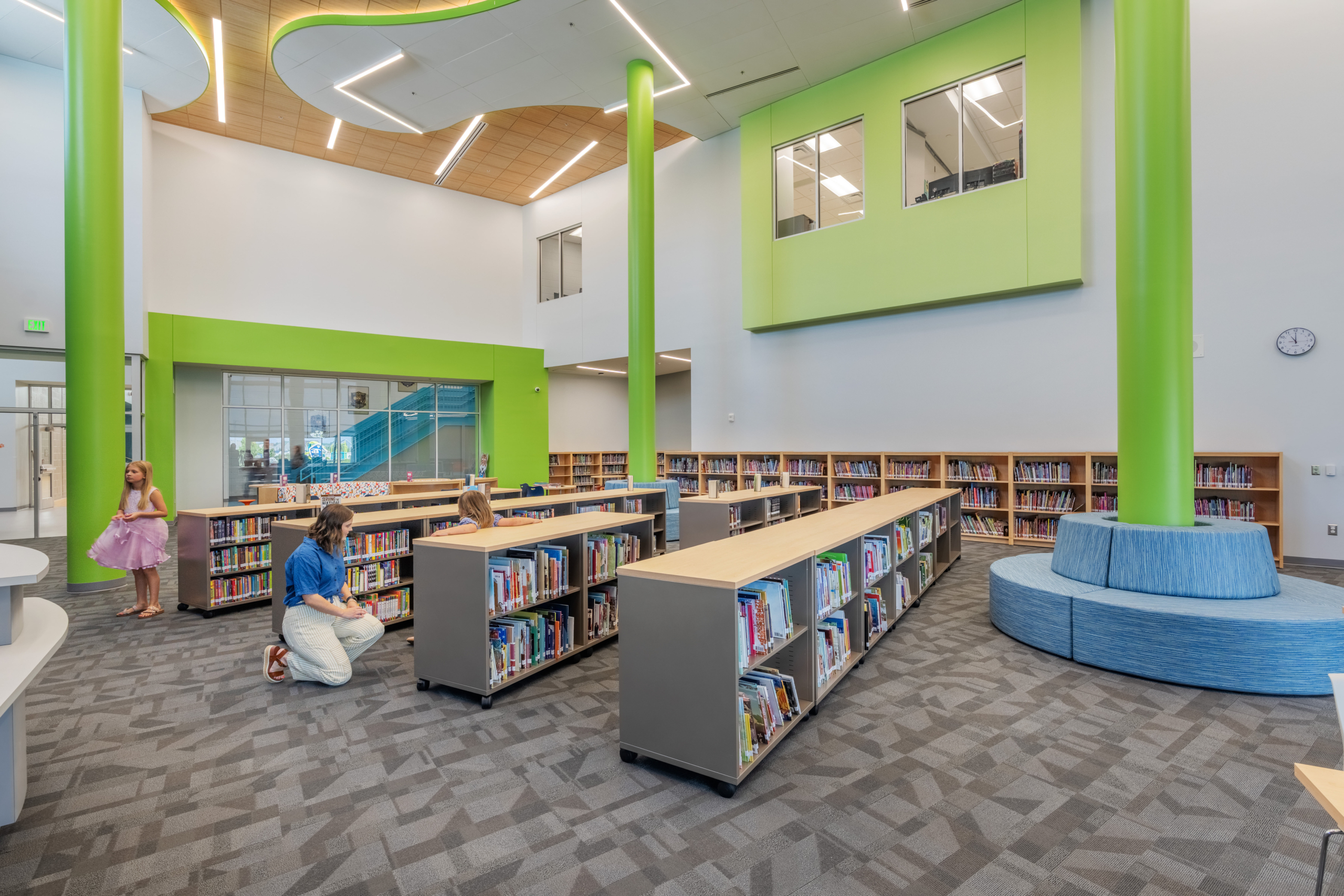
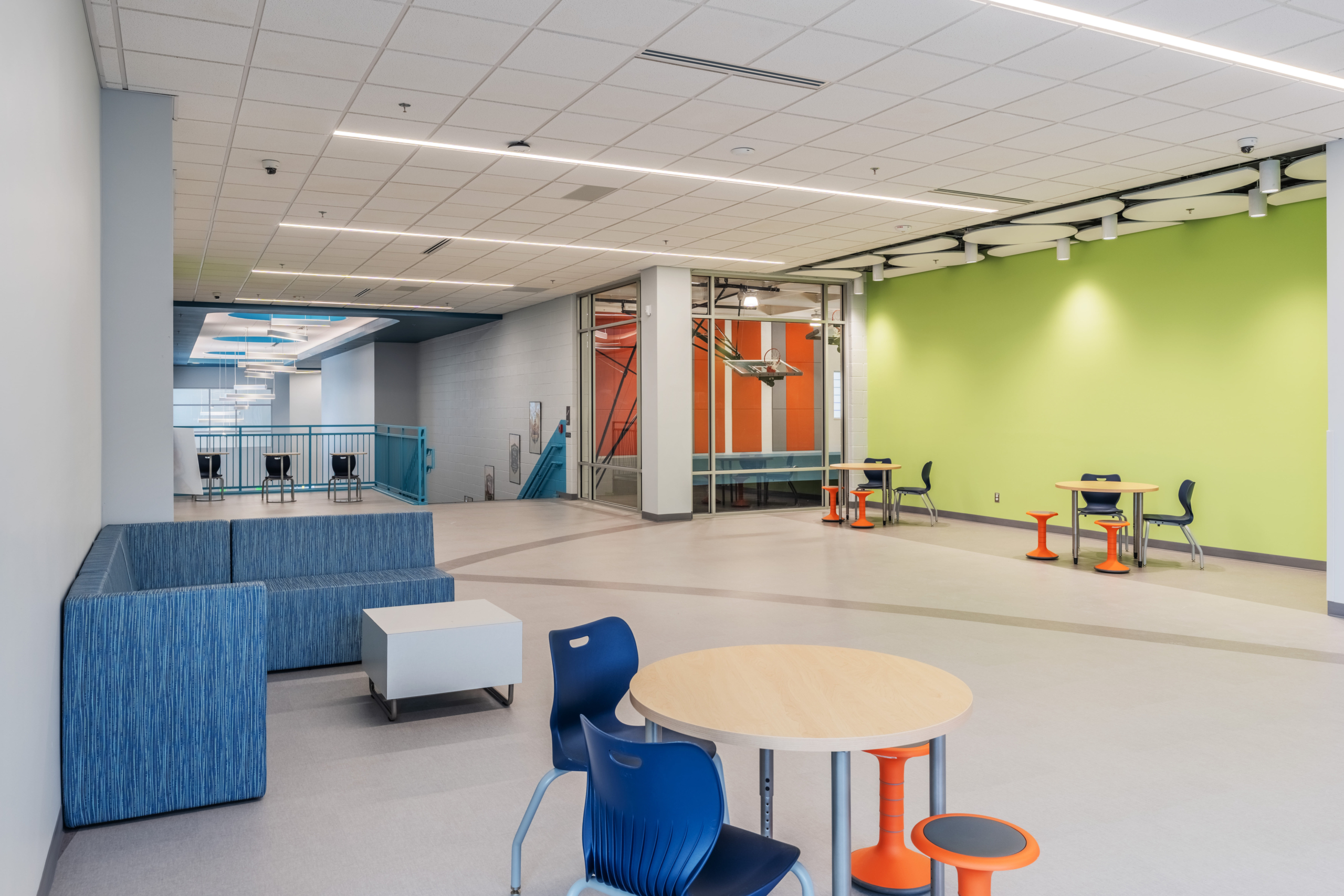
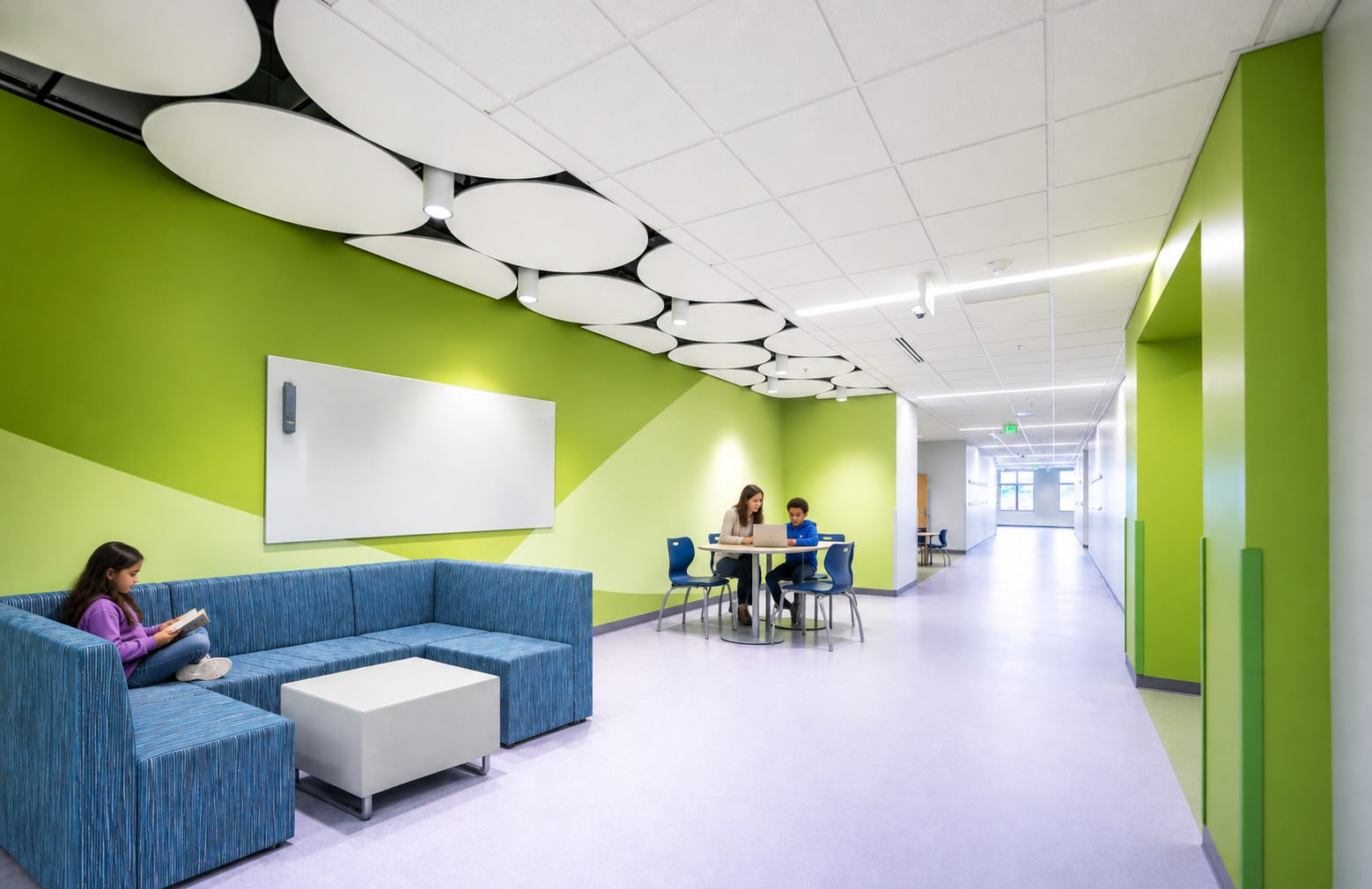
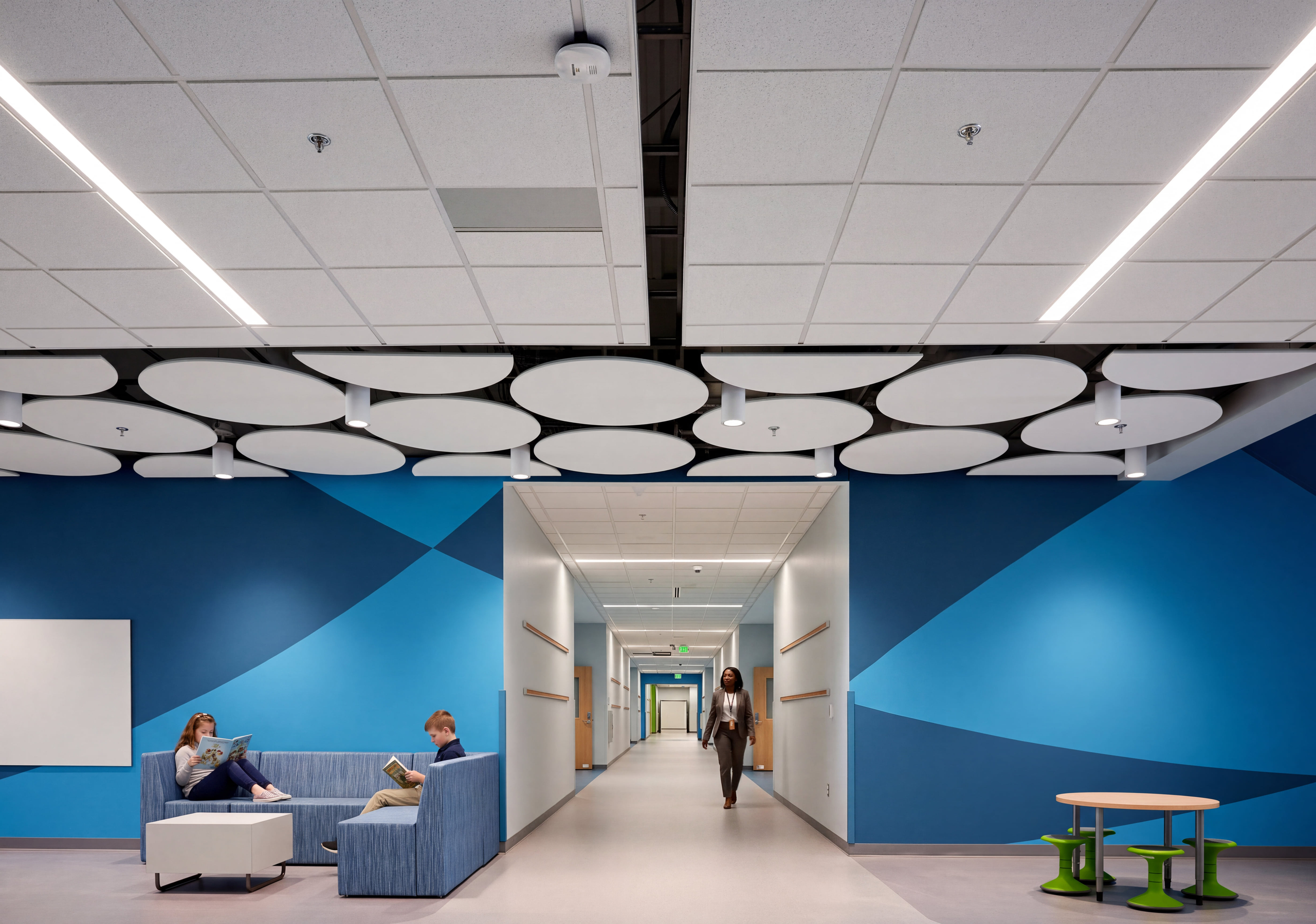
Additionally, Tulls Creek includes many indoor and outdoor learning commons. These spaces can be found in hallways, corridors, underneath staircases, and in outdoor areas to allow for learning, collaboration, and socialization to occur in every space. In addition to supporting the active learning pedagogy, these spaces ensure that every square foot of Tulls Creek is taken full advantage of, providing even greater value to the school.
Reducing Overstimulation
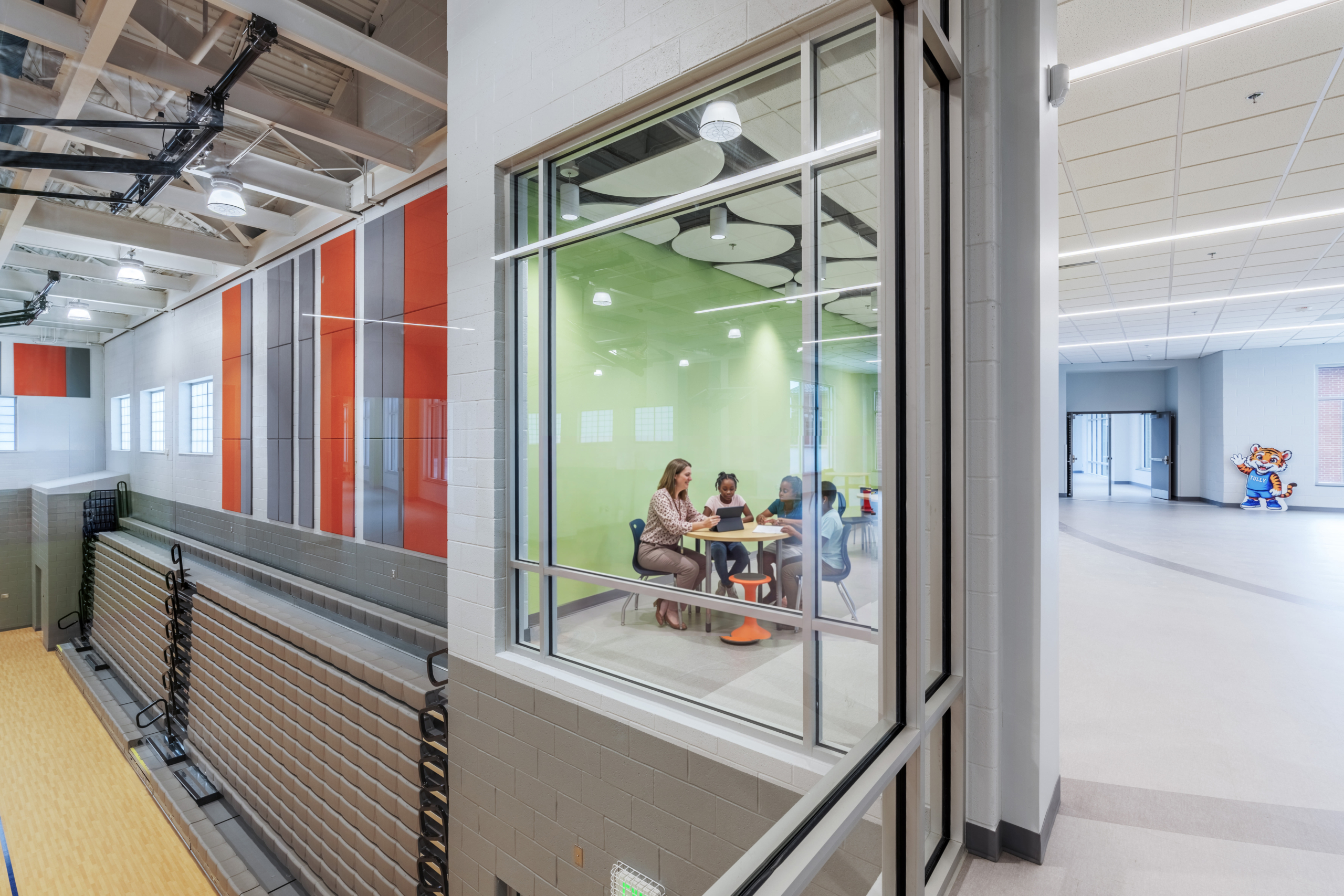
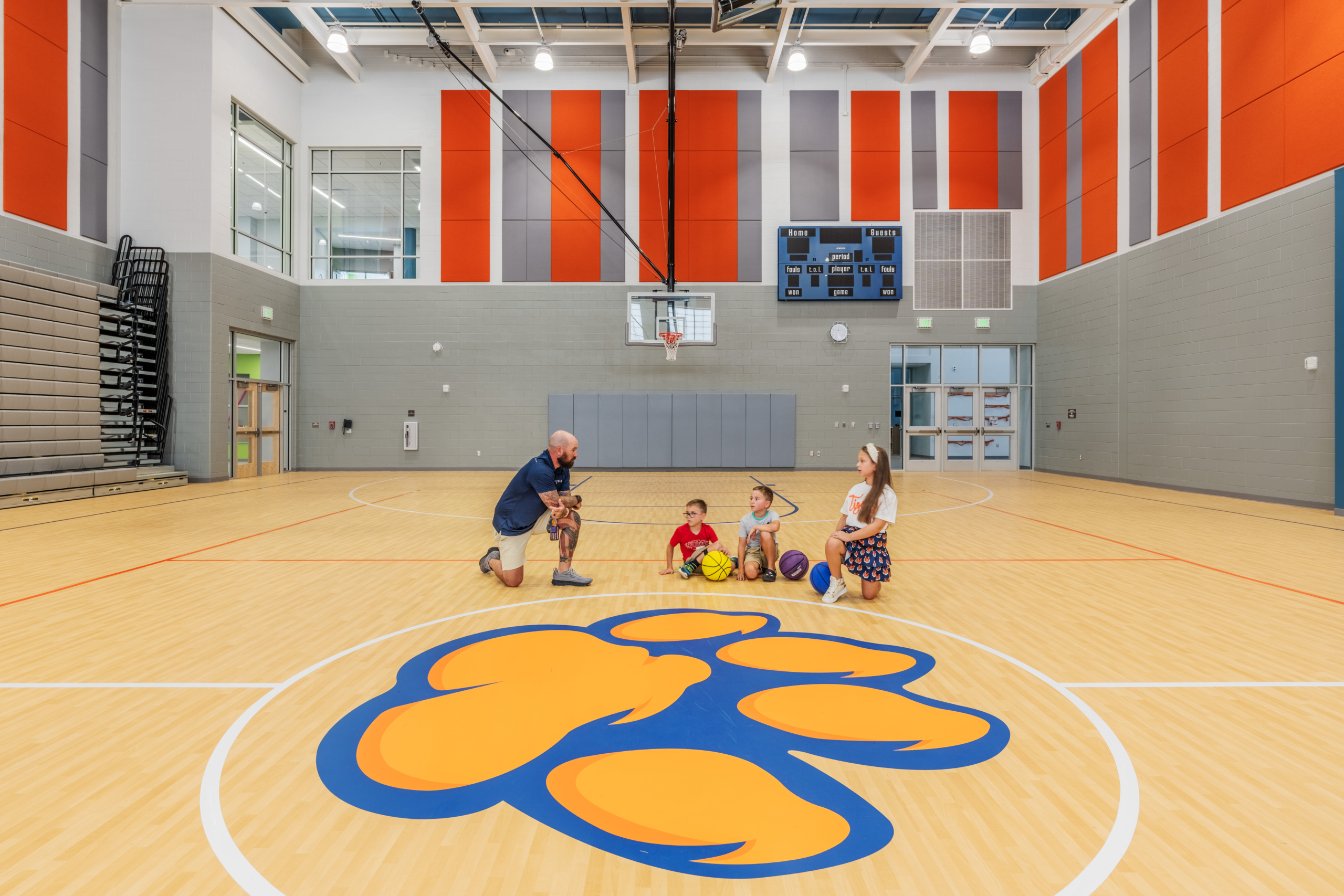
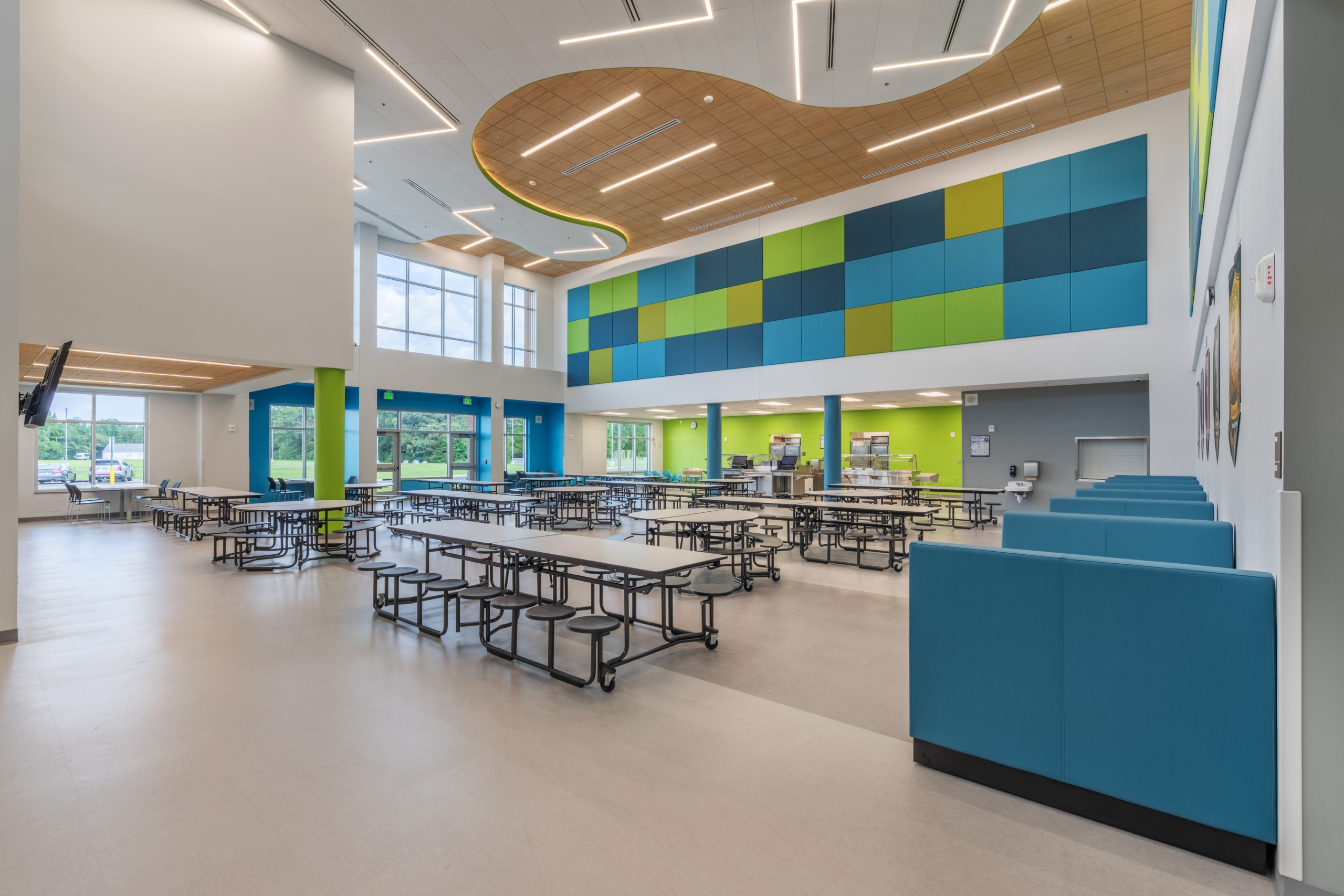
Constant background noise, unpredictable noises, or multiple overlapping audio sources can significantly impair the ability to learn by overwhelming the brain’s auditory filtering system. To reduce auditory distractions, sound-absorbing panels were incorporated into large, high-occupancy spaces such as the cafeteria, gymnasium, and learning commons to reduce reverberation and control background noise. By absorbing sound rather than allowing it to bounce throughout the room, the panels improve speech intelligibility and create a more comfortable environment for students, staff, and visitors.
Finding Their Way Home
Early in the design process, we worked closely with Currituck County and Currituck County Schools to understand their vision for the school and identify what was most important to them in terms of its overall look and feel. Through those conversations, we established a shared goal of creating an interior that feels fun, welcoming, and engaging.
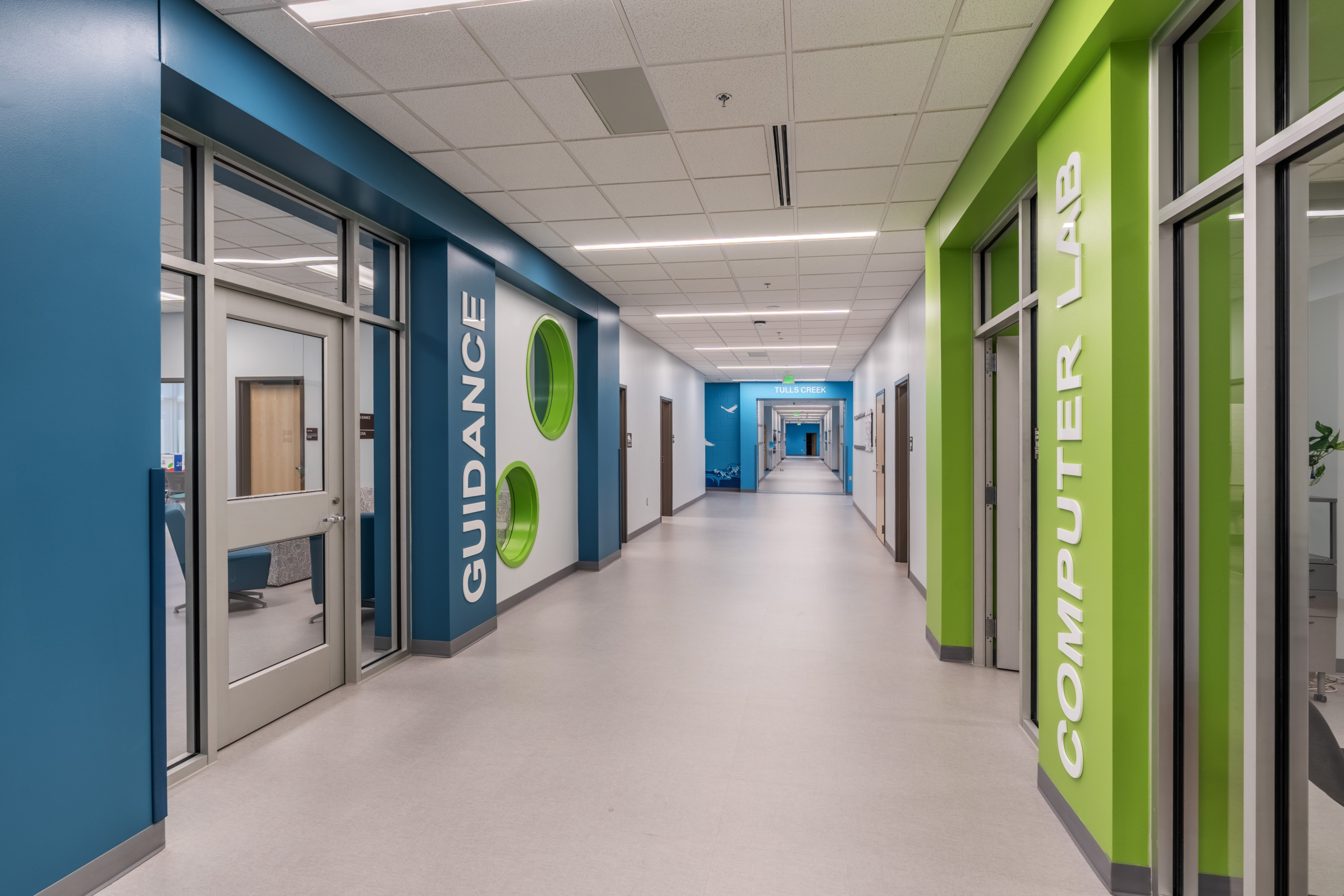
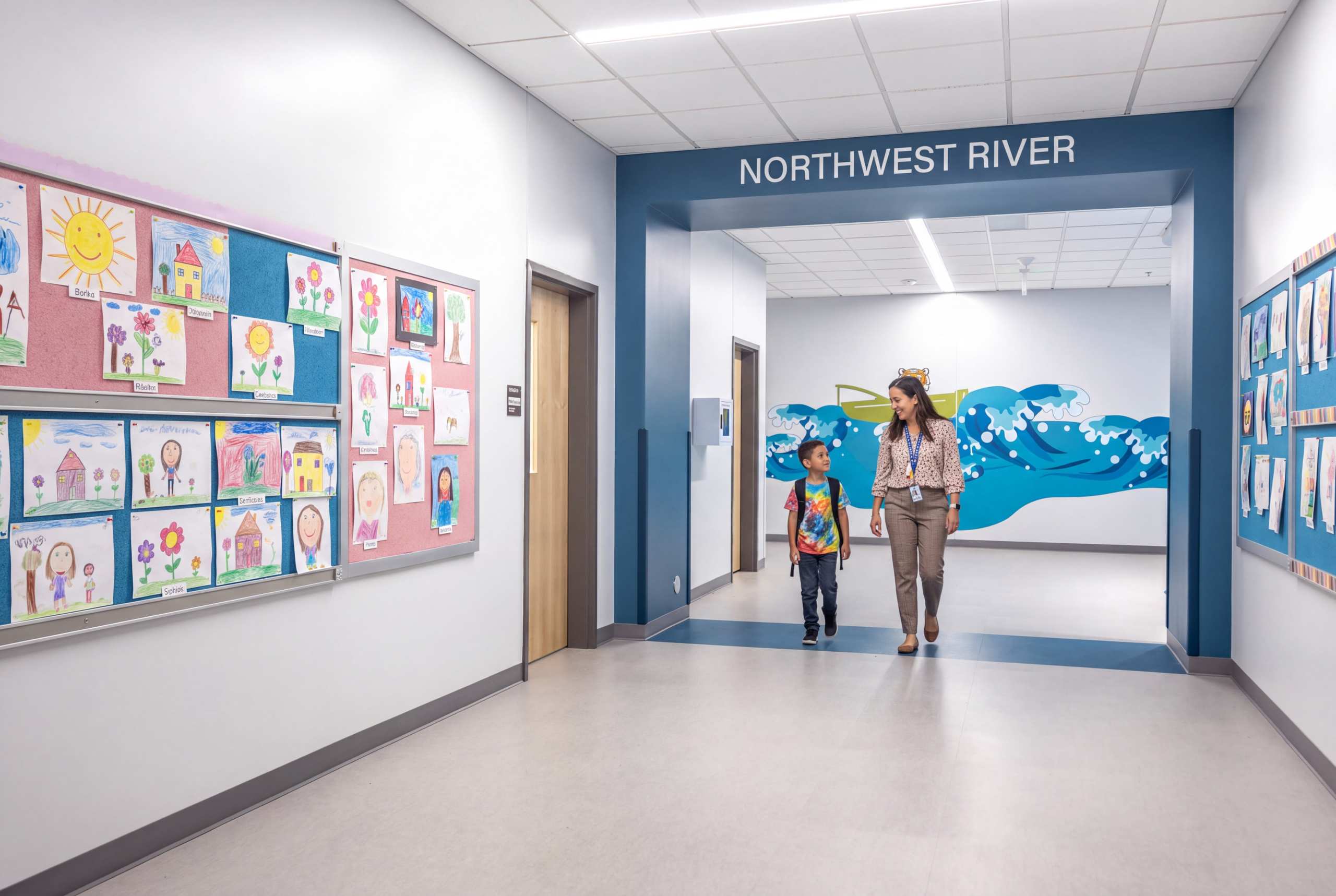
Drawing from the local ecosystem and landmarks, we designed interiors that feel familiar and welcoming to first-time students and resonate with the community. This narrative informed our wayfinding system, providing a clear and intuitive framework to help students confidently navigate the large school. By incorporating colors, graphics, and familiar visual cues, the wayfinding strategy our team developed is approachable and engaging for young learners while remaining intuitive for everyone.
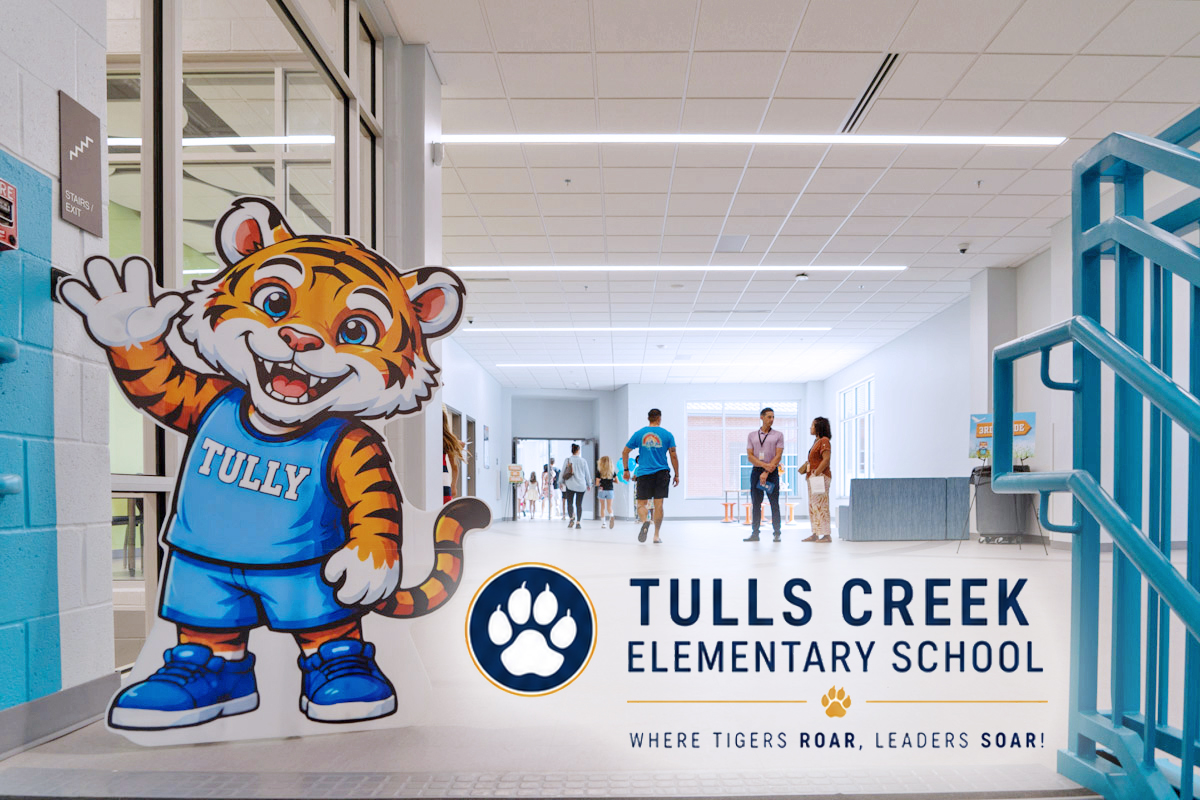
Introducing Tully the Tiger
As part of our branding initiative for Tulls Creek Elementary School, we worked with Currituck County Schools to create the school’s mascot, Tully the Tiger. Students were given several mascot options and voted for their favorite, ultimately choosing the Tiger, which represents strength, courage, and excellence — qualities central to the District’s mission. Our aim was to design a mascot that’s fun, spirited, and relatable to young learners. Rather than a “fierce warrior” design commonly seen in mascots for professional sports or in secondary education, Tully is depicted as a cheerful student who embodies school spirit in a way that resonates with grades K-5.